.png)


Emotionally Focused Therapy
Emotionally Focused Therapy (EFT) is an evidence-based, attachment-focused approach to therapy that helps individuals and couples better understand their emotions, strengthen their relationships, and create lasting change.
Developed by Dr. Sue Johnson, EFT is based on the understanding that our need for connection, safety, and belonging is a fundamental part of being human.
Rather than focusing solely on changing thoughts or behaviours, EFT helps clients explore the emotions and attachment needs that shape their experiences and relationships. Through this process, clients develop a deeper understanding of themselves and learn new ways of responding to emotional challenges.
EFT for Individuals (EFIT)
Many of our struggles can be understood through the lens of attachment and emotional experience. Anxiety, depression, self-criticism, relationship difficulties, and the impact of trauma often stem from patterns that developed in response to our need for safety, connection, and protection.

Using EFT, we help individuals:
-
Better understand and regulate difficult emotions
-
Explore patterns that may be keeping them stuck
-
Develop greater self-compassion and emotional resilience
-
Heal the impact of past experiences and attachment wounds
-
Build more secure and fulfilling relationships
-
Strengthen their sense of self and emotional well-being
EFT provides a supportive space to explore your experiences with curiosity and compassion, helping you move toward greater emotional clarity and connection with yourself.

Why Attachment Matters
Attachment refers to our need for safe, supportive relationships. The ways we learned to connect with others early in life can continue to influence how we experience relationships as adults.
When we feel emotionally disconnected or unsupported, we may respond by withdrawing, becoming critical, seeking reassurance, or feeling overwhelmed. EFT helps make sense of these reactions and supports the development of more secure ways of relating to ourselves and others.
EFT for Couples (EFCT)
Relationships can become stuck in painful cycles of conflict, distance, misunderstanding, or disconnection. Often, beneath arguments about communication, intimacy, parenting, or trust are deeper emotions and attachment needs that remain unseen or unspoken.
EFT helps couples:
-
Identify and understand negative interaction patterns
-
Improve communication and emotional responsiveness
-
Strengthen trust and emotional safety
-
Repair injuries and rebuild connection
-
Navigate life transitions and relationship stressors
-
Create a more secure, supportive partnership
Rather than focusing on who is right or wrong, EFT helps partners understand the cycle they are caught in and work together to create new patterns of connection.

EFT with Kumsal
As an EFT therapist, Kumsal views emotional experiences as valuable sources of information rather than problems to eliminate.
Her approach is warm, collaborative, and grounded in trauma-informed care. She integrates EFT with other evidence-based approaches, including CBT, DBT, mindfulness, and psychodynamic perspectives, while maintaining a focus on emotional processing and attachment.

Whether you are seeking support as an individual or as a couple, therapy can provide an opportunity to understand your experiences better, strengthen your relationships, and create meaningful, lasting change.
If you're interested in learning more about EFT or exploring whether it may be a good fit for your needs, we welcome you to reach out for a consultation.
Meet Kumsal
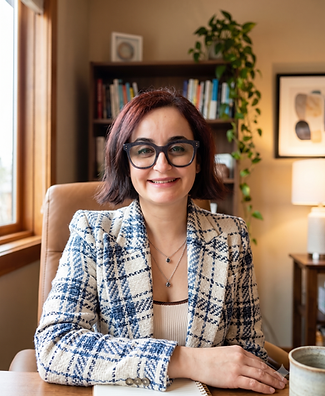
Kumsal Kosar, BSc, PhD, MSW, RSW
Registered Social Worker, Psychotherapist
Founder & Owner of Our Healing Connection Therapy
Welcome! I’m Kumsal, a Registered Social Worker, Psychotherapist, and the founder of Our Healing Connection.
My passion is helping individuals and couples navigate distress, heal from trauma, and build more secure, resilient relationships.
Because therapy is a deeply personal journey, I want you to feel confident that you are working with a qualified, highly trained specialist who grounds their practice in evidence-based methods.
My Credentials & Professional Background
Professional Registration:
-
I am a Registered Social Worker in good standing with the Ontario College of Social Workers and Social Service Workers (OCSWSSW), Registration Number: 848023.
-
I am also registered to provide online services in two other provinces:
-
Nova Scotia College of Social Workers (NSCSW) (Telepractice Registration) | Registration Number: 10776
-
Alberta College of Social Workers (ACSW) (E-practice) | Registration number: 20538
Education:
I hold a Bachelor of Science (BSc), a Doctor of Philosophy (PhD), and a Master of Social Work (MSW).
Years of Experience:
I bring over 10 years of clinical and academic experience in mental health to my practice, combining deep academic research with hands-on therapeutic expertise.
Specialized EFT Training:
I have dedicated myself to intensive training in this model to ensure my clients receive the most effective care possible.
My specialized training includes;
-
Emotionally Focused Individual Therapy (EFIT) for Trauma: A 2-Day in-person Certification Training in Healing Attachment Wounds. Trainers: Dr. Leanne Campbell, PhD and Robin Williams Blake, RP (upcoming October 29-30, 2026), PESI Canada, 12 hours
-
Mastering Skills and Overcoming Challenges in EFIT: A Consultation Process - Trainers: Dr. Senem Zeytinoglu Saydam and Dr. Ali Barbosa - ICEEFT, 12 hours
-
Emotionally Focused Individual Therapy Essentials (Level 1+ Level 2) - Trainers: Dr. Kathryn De Bruin and Dr. Teri Murphy, ICEEFT, 24 hours
-
Using Attachment History to Map the Cycle & Decode the Attachment Dilemma - Trainer: Dr. Ryan Rana (May 22, 2026) - SNVEFT, 6 hours
-
Attachment Injury Repair (AIRM) - Trainers: Drs. James Hawkins & Leanne Campbell - SNVEFT, 12 hours
-
Gottman Method Couples Therapy Level 1 and Level 2 (ongoing) - The Gottman Institute, 30 hours
-
Emotionally Focused Couples Therapy – Core Skills Extended - (2025 - 2026) Trainer: Dr. Kathryn De Bruin - ICEEFT, 48 hours
-
Emotionally Focused Couples Therapy (EFCT) Certificate Course - Trainers: Dr. James Hawkins, Dr. Kathryn De Bruin and Robin Blake - Psychotherapy Networker, 15 hours
-
Emotionally-Focused Therapy for Couples (EFCT) 4-day Externship - Trainers: Robin Blake and Dr. Senem Zeytinoglu Saydam - TCEFT / ICEEFT, 24 hours
Ongoing Supervision & Consultation
I actively participate in advanced clinical consultation and supervision to continually refine my practice.
My Approach
I offer compassionate individual and couples therapy in both English and Turkish. Services are available virtually across Ontario, Alberta, and Nova Scotia, and in-person at my Toronto office.
Whether you are seeking to repair a repeating conflict in your relationship or heal from past trauma, I am here to support you every step of the way
The Stages of EFT: A Structured Journey
EFT follows a clear, three-stage roadmap designed to guide individuals and couples from conflict toward lasting connection.
-
Stage 1: De-escalation (Stabilization)
In this initial phase, the therapist works with you to identify and "map" the negative cycles that keep you stuck. Instead of viewing these patterns as personal failures, you learn to see them as protective reactions—often fueled by underlying fears or unmet attachment needs. The goal is to lower emotional reactivity, stop the destructive back-and-forth, and create a safer emotional environment.
-
Stage 2: Restructuring Emotional Bonds
Once the cycle is de-escalated, therapy moves into restructuring interactions. You will be guided to explore deeper, more vulnerable emotions beneath the surface (such as fear of abandonment or loneliness) and express these needs clearly to one another. By sharing these primary emotions rather than acting out defensive secondary emotions (like anger or withdrawal), you create "corrective emotional experiences" that build trust and responsiveness.
-
Stage 3: Consolidation and Integration
In the final stage, the focus shifts to solidifying your gains. You integrate these new, positive interaction patterns into your everyday life, ensuring they become stable habits. You and your partner (or the individual client) practice applying these new solutions to old, problematic issues, fostering a secure, resilient, and enduring emotional bond.
What’s Possible: Outcomes of EFT
EFT is designed to move beyond superficial conflict resolution, fostering profound changes in how you relate to yourself and those you love.
Typical outcomes include:
-
Deeper Emotional Connection: Moving from feeling disconnected or like "roommates" to experiencing secure, trusting, and responsive bonds.
-
Improved Emotional Regulation: Gaining the skills to recognize, understand, and manage difficult emotions without becoming overwhelmed or shutting down.
-
Reduced Relationship Distress: A significant decrease in the frequency and intensity of arguments, with couples often reporting a shift from defensiveness to empathy.
-
Increased Resilience: Building a secure foundation that helps you navigate future challenges—such as life transitions, trauma, or stress—as a team rather than in isolation.
-
Lasting Change: Because EFT targets the root emotional patterns rather than just surface-level communication, the benefits are durable, often lasting well beyond the end of therapy.
Research and Evidence-Based Practice
Emotionally Focused Therapy is considered a "gold standard" in evidence-based couples therapy. Developed in the 1980s by Dr. Sue Johnson and Dr. Leslie Greenberg, EFT has been the subject of over 35 years of peer-reviewed clinical research.
Studies consistently demonstrate its effectiveness, with approximately 70–75% of couples moving from distress to recovery, and nearly 90% experiencing significant improvements in their relationship satisfaction.
Research continues to validate its success not only for relationship distress but also for individuals struggling with depression, anxiety, and trauma.
For more information on the science behind these transformations, you can explore the work of Dr. Sue Johnson or the resources available through the International Centre for Excellence in Emotionally Focused Therapy (ICEEFT).
Books by Dr. Sue Johnson
-
Johnson, S. M. (2004). The practice of emotionally focused couple therapy: Creating connection. Brunner-Routledge.
-
Johnson, S. M. (2008). Hold me tight: Seven conversations for a lifetime of love. Little, Brown Spark.
-
Johnson, S. M. (2013). Love sense: The revolutionary new science of romantic relationships. Little, Brown Spark.
-
Johnson, S. M. (2019). Attachment theory in practice: Emotionally focused therapy (EFT) with individuals, couples, and families. Guilford Press.
-
Johnson, S. M., & Campbell, L. (2021). A primer for emotionally focused individual therapy (EFIT): Cultivating fitness and growth in every client. Routledge.
Organizational and Clinical Resources
-
International Centre for Excellence in Emotionally Focused Therapy. (n.d.). What is EFT? https://iceeft.com
-
Johnson, S. M. (n.d.). About Dr. Sue. https://drsuejohnson.com
Research Context
-
Brubacher, L.L., & Greenman, P.S. (2025). “Keeping the Horse Before the Cart: The Importance of Stabilization in Emotionally Focused Individual Therapy (EFIT).” International Journal of Systemic Therapy, 1–34.
-
Wiebe, S.A., Johnson, S.M., Allan, R., Campbell, T.L., Greenman, P.S., Fairweather, D.R., Ismail, M., & Tasca, G.A. (2025). “A randomized controlled trial of emotionally focused individual therapy (EFIT) for depression and anxiety.” Psychotherapy, 62(3), 414-423.
-
Olden, J., & Rheem, K. (2025). “Case Conceptualization Using Emotionally Focused Therapy with Couples.” The American Journal of Family Therapy, 1–16.
-
Wittenborn, A.K. (2012). “Exploring the Influence of the Attachment Organizations of Novice Therapists on their Delivery of Emotionally Focused Therapy for Couples.” Journal of Marital and Family Therapy, Vol.38, Supplement s1, 50-62.
-
Lebow, J.L., Chambers, A.L., Christensen, A., & Johnson, S.M. (2012). “Research on the Treatment of Couple Distress.” Journal of Marital and Family Therapy, 38(1), 145-168.
-
Greenman, P.S., & Johnson, S.M. (2012). “United we stand: Emotionally Focused Therapy (EFT) for Couples in the treatment of post-traumatic stress disorder.” Journal of Clinical Psychology: In Session, 68(5), 561-569.
-
Montagno, M., Svatovic, M., & Levenson, H. (2011). “Short-Term and Long-Term Effects of Training in Emotionally Focused Couple Therapy: Professional and Personal Aspects.” Journal of Marital & Family Therapy, 37(4), 380-392.
-
Sandberg, J.G., Knestel, A., & Cluff Schade, L. (2013). “From Head to Heart: A Report on Clinicians’ Perceptions of the Impact of Learning Emotionally Focused Couple Therapy on Their Personal and Professional Lives.” Journal of Couple & Relationship Therapy, 12, 38-57.
-
Johnson, S.M., & Greenman, P. (2006). “The path to a secure bond.” Journal of Clinical Psychology: In Session, 62(5), 597-609.
-
Johnson, S.M. (2006). “Integration in emotionally focused therapy: A reply to Simon (2004).” The Family Journal, 14(1), 8-12.
-
Makinen, J., & Johnson, S.M. (2006). “Resolving attachment injuries in couples using EFT: Steps towards forgiveness and reconciliation.” Journal of Consulting and Clinical Psychology, 74(6), 1055- 1064.
-
Woolley, S., & Johnson, S.M. (2006). “Creating secure connections: Emotionally focused therapy.” Japanese Journal of Addiction and the Family, 23(2), 329-346.
Contact Us
We provide a free 15-minute consultation to connect and determine whether we are a good fit. It will also give us a better idea of the issues you are looking for support with and how we can support you.
Are you ready to establish our healing connection?
You can email us at hello@ourhealingconnection.ca
to request an appointment.
